Material
The Geometry of Carbon
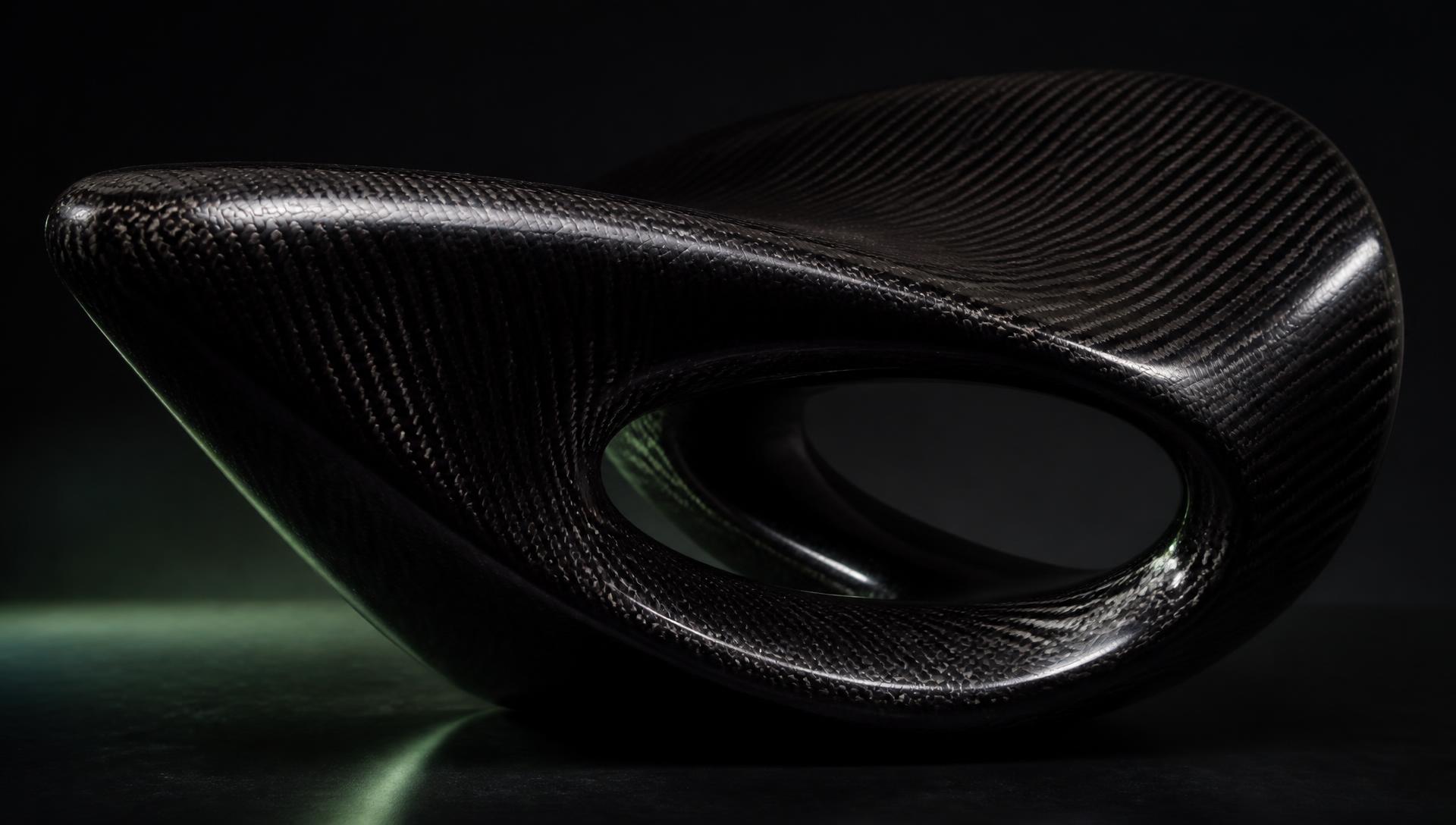
Carbon fiber is defined not only by the material itself, but by the way its fibers are arranged. Direction, layering and geometry influence how a composite responds to force — and how its surface takes shape.
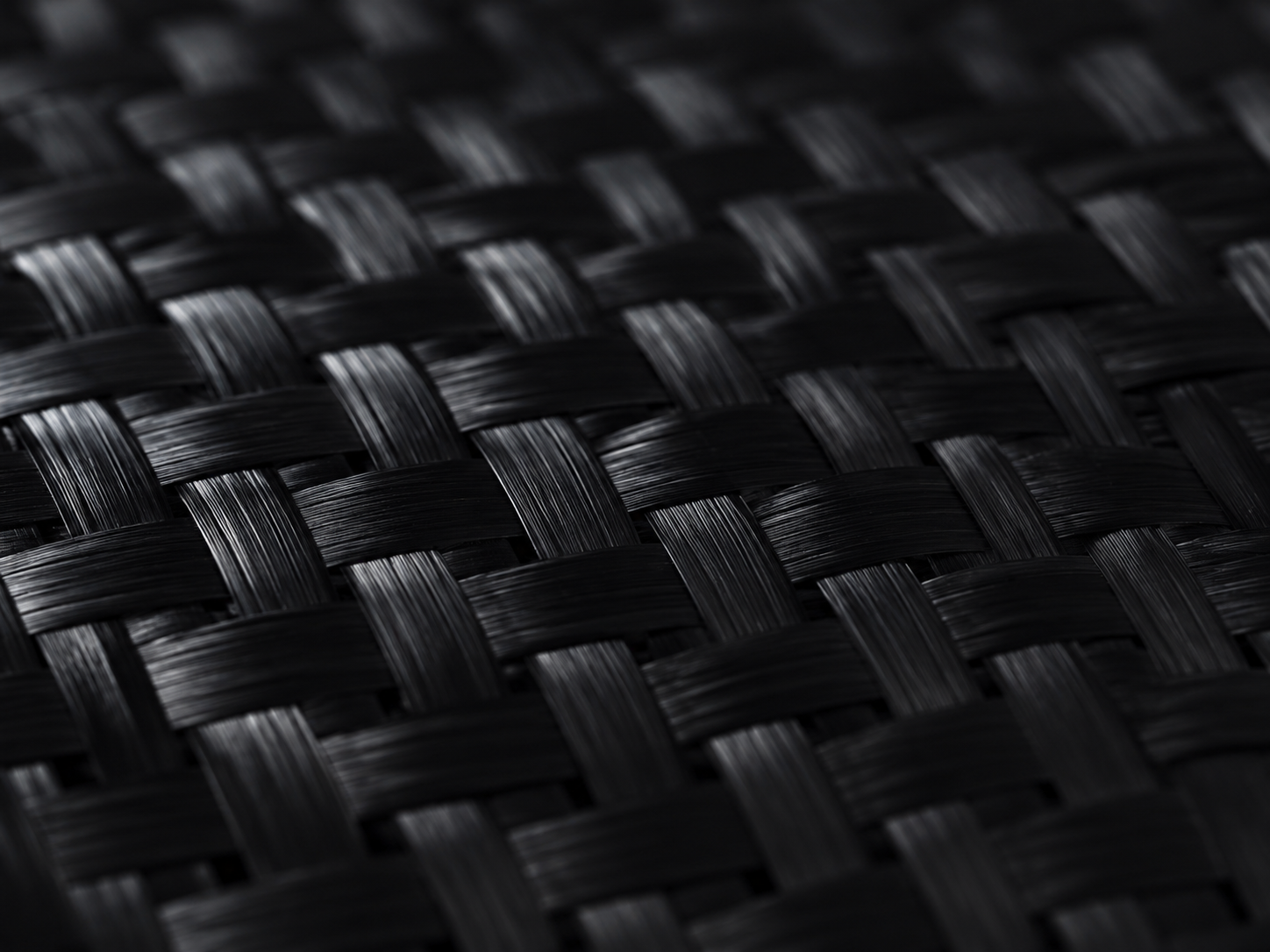
Woven carbon fiber is made from interlaced bundles of continuous filaments, typically arranged in a twill or plain weave. This regular grid gives reinforcement in more than one direction and creates the familiar ordered surface. The final properties depend on the fabric style, the way each layer is oriented, and the resin system that binds them together.
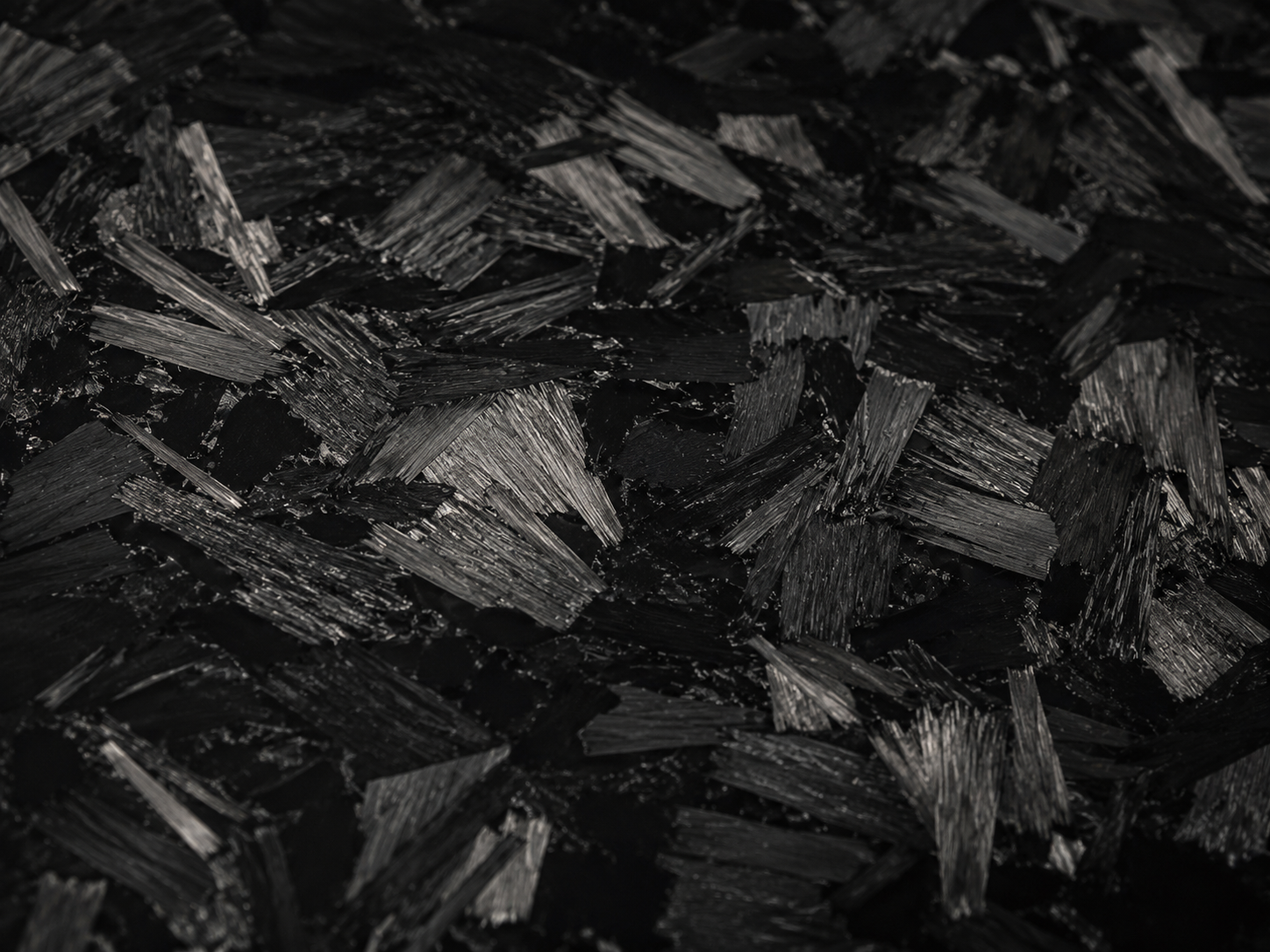
Forged carbon fiber uses shorter, chopped fibers combined with resin and formed under heat and pressure. The process allows complex molded geometries and produces the irregular, almost organic surface pattern that distinguishes it from woven cloth. Each piece carries a unique distribution of fibers.
Geometry and material behavior
A carbon-fiber composite is a relationship between fiber, resin and form. The geometry of the layup — the angles, layers and directions — is what turns a sheet of material into something that holds its shape under load. Woven and forged constructions simply approach that geometry differently, each suited to its own purpose.